Death Card in a Tarot Reading: Meaning Without Fear
An open, honest look into the Death card's meaning in tarot, including endings, transformation, reversals, relationships, and ways to read it without fear.
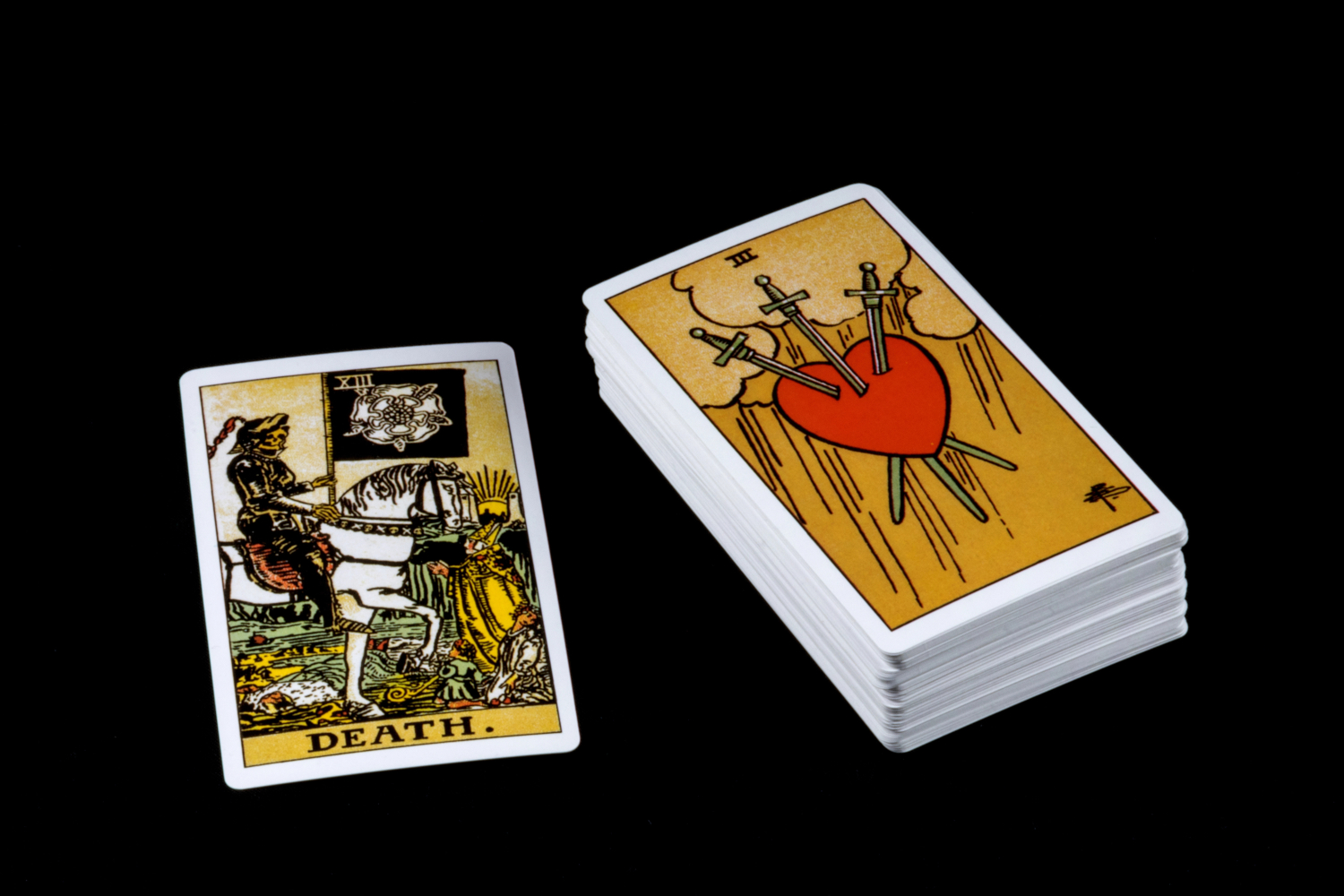
You turn over a card, see a skeleton, and feel your stomach drop. Even if you know tarot is symbolic, the word Death can make the room feel suddenly colder.
Before fear takes over, pause. In most tarot readings, the Death card does not predict a literal death. It more often points toward an ending, transition, release, or deep change—the moment when one chapter can no longer continue in quite the same form.
That does not make it a weightless card. Endings can hurt, even when they are necessary or already underway. But Death is not a sentence handed down by the cards. It is an invitation to notice what is changing, what may be complete, and how you want to meet the threshold in front of you.
What does the Death card mean in a tarot reading?
The Death card commonly represents transformation through ending. Something may be ready to close, shed its old shape, or make room for what comes next. Depending on the question and surrounding cards, this could involve a habit, identity, expectation, relationship pattern, role, belief, project, or season of life.
One possible interpretation is simple: This cannot remain exactly as it has been. That message may bring relief, grief, resistance, curiosity, or several feelings at once.
The card does not guarantee that a specific event will happen. It also does not tell you that every ending is welcome or that you should rush yourself toward “transformation.” Sometimes the most honest response is to acknowledge that a change is difficult and give yourself time to understand it.
Why does the Death card look so frightening?
Tarot’s imagery has always included vivid figures and moral or social themes. The Death card appeared among the picture cards in early Italian tarot decks. A surviving Death card from the Visconti-Sforza Tarot dates to about 1450, according to The Metropolitan Museum of Art’s history of tarot. Those early cards belonged to a trick-taking game; tarot’s widespread association with fortune-telling came centuries later.
In many modern decks influenced by the Rider-Waite-Smith tradition, Death is numbered XIII and shows a skeleton riding through a landscape. The image is direct because endings are direct. Change touches status, plans, routines, and identities without asking whether the timing feels convenient.
Yet the card often contains signs of continuation as well as loss: a horizon, water, light, movement, or living figures around the central image. Decks portray these details differently, so begin with the artwork in front of you. Ask what is ending in the scene, what remains, and where movement is still possible.
Death is usually about change, not literal death
A responsible tarot reader should not use this card to predict a person’s death or diagnose a health condition. Tarot cannot determine whether someone is ill, how long anyone will live, or what a medical outcome will be.
If the card appears in a reading about health, grief, or someone you love, bring the focus back to the question you can safely explore. You might ask:
- What transition am I trying to understand?
- What support would help me move through this uncertainty?
- What is within my control right now?
- Where do I need reliable information from a qualified professional?
If the image triggers intense fear, you are allowed to stop the reading. Put the deck away, ground yourself in the present, and seek appropriate support. A tarot card should never be used to frighten you into purchasing another reading or ritual.
Common ways to interpret the Death card
An ending that is already happening
Sometimes Death names what you already know: a role no longer fits, a routine has run its course, or an old version of a plan cannot carry you forward. The card may help you acknowledge the ending instead of spending all your energy pretending nothing has changed.
Letting go of an old pattern
The ending may be internal. A belief, coping pattern, expectation, or story about yourself could be losing its hold. Letting go does not mean condemning the person you were. That pattern may once have protected or guided you. You can thank it for what it offered and still decide that it no longer belongs in the next chapter.
A transition without a clear destination
Death can appear in the uncomfortable middle: after the old shape has loosened but before the new one is obvious. Tarot does not have to fill that uncertainty with a prediction. The card may simply validate that you are between chapters and need room to adjust.
Making space
Not every change arrives from outside you. Sometimes this card asks what you are ready to stop feeding. It may invite a boundary, a completed commitment, a cleared calendar, or a conversation that brings closure to your part of a situation.
A change in identity
Growth can involve releasing a label or role that once felt central. You may be learning to see yourself differently after a move, breakup, new responsibility, creative shift, or change in priorities. Death can reflect the tenderness of becoming unfamiliar to yourself while a new sense of identity takes shape.
What the Death card may mean in different readings
Context matters. The same card can speak differently depending on the question, spread position, and cards around it.
In a relationship reading
Death may point to a relationship changing form, an old dynamic ending, or a pattern that cannot continue unchanged. It does not automatically mean a breakup, reunion, or permanent separation. A more useful question is: What part of my experience in this relationship is ready to change?
Keep the reading centered on your choices, needs, and boundaries. The card does not grant access to another person’s private thoughts or guarantee what they will do.
In a career or creative reading
The card may reflect the completion of a project, a changing ambition, the end of a work pattern, or a desire to use your skills differently. Before making a major decision, gather practical information. Tarot can help you explore your values, but it should not replace financial, legal, or professional advice.
In a personal-growth reading
Death can invite an honest look at what you have outgrown. This is not a demand to reinvent yourself overnight. It may be enough to identify one assumption you are questioning or one small way you want to respond differently.
What does the reversed Death card mean?
When a card appears upside down, readers call it reversed. Some readers use reversals and others do not. Neither method is more legitimate.
Reversed Death is often interpreted as resistance to change, a delayed ending, unfinished release, or transformation happening inwardly before it becomes visible. It may suggest that part of you knows a chapter is complete while another part is still holding the door open.
That resistance is not a failure. People often need time to grieve, prepare, gather support, or understand what they are leaving. Instead of asking, “Why can’t I just let go?” try asking, “What would help me feel safe enough to loosen my grip?”
A reversal is not automatically more negative than an upright card. It adds nuance. Read it alongside the spread position, your question, and your actual circumstances.
How surrounding cards can change the conversation
No tarot card exists in isolation. The cards beside Death can suggest where the transition is felt or what may support you through it.
- With The Tower: The change may feel sudden or may expose a structure that was already unstable. Slow down and focus on what is true and manageable now.
- With The Star: Hope, healing, or renewed direction may become more visible after an ending is acknowledged.
- With the Four of Pentacles: Holding tightly to certainty, control, or resources may be part of the tension.
- With the Eight of Cups: The reading may emphasize choosing to leave something emotionally incomplete because staying is no longer nourishing.
- With The Sun: Clarity, vitality, or a more open chapter may follow—but it is still a possibility, not a promised outcome.
These pairings are examples, not formulas. The question and the imagery in your specific deck remain part of the interpretation.
A grounding practice when you draw Death
If the card unsettles you, set both feet on the floor and take one slow breath. Look around the room and name three ordinary things you can see. Then return to the card and write brief answers to these questions:
- What is changing—or asking to change—in my actual life?
- What am I afraid this card means?
- Which part of that fear is a fact, and which part is a story?
- What deserves to be honored before I let it go?
- What is one compassionate next step that remains within my control?
You do not need to force an answer. The practice is not about making an ending sound beautiful. It is about creating enough room to meet change without surrendering your judgment to a frightening image.
Frequently asked questions about the Death card
Is the Death card always bad?
No. It can describe a painful ending, a welcome release, or a complicated mixture of both. The card’s meaning depends on the question and context. “Difficult” and “bad” are not always the same thing.
Does the Death card mean my relationship will end?
Not necessarily. It may point toward a changing dynamic, an old pattern ending, or a need to approach the relationship differently. Tarot cannot guarantee whether another person will stay, leave, or return.
Should I reshuffle if I draw Death?
You can end a reading if you feel overwhelmed, but you do not need to reject the card. First notice your reaction. If you continue, ask a grounding follow-up such as, “What support is available during this transition?” Avoid drawing card after card in search of a less uncomfortable answer.
What is the positive side of the Death card?
The card can bring honesty, release, and permission to stop maintaining what is complete. Its hope is not that every ending feels good. Its hope is that change can create space for a life that fits more truthfully.
Can the Death card predict physical death?
Tarot should not be used to predict physical death or make medical claims. If you are worried about someone’s health or safety, seek reliable information and qualified support rather than asking the cards for certainty.
The card is a threshold, not a threat
The Death card may never become your favorite card, and it does not need to. Its value is not in making endings easy. It asks for compassionate honesty about what has changed, what may be complete, and what you still get to choose.
You are allowed to move slowly. You are allowed to grieve what mattered. You are allowed to keep what remains meaningful while releasing the shape it once had. The card can sit at the table without taking authority over your life.
Tarot offers space for spiritual reflection and entertainment without guaranteed predictions or outcomes. It does not replace medical, mental-health, legal, or financial advice. Your choices are always your own.
If the Death card has left you with a question about how Tarot Over Tea approaches difficult cards, you are welcome to reach out through the contact page. There is no pressure to book a reading; sometimes a clear answer about the process is all you need.
Sources
- Tim Husband, “Before Fortune-Telling: The History and Structure of Tarot Cards,” The Metropolitan Museum of Art.
- “Gioco di carte con nuovo forma di Tarocchini,” The British Museum.