Free Love Tarot: What Are They Thinking? A Gender-Inclusive 3-Card Reading for Clarity
Try a free 3-card love tarot spread to explore what you know, what may be unclear, and the compassionate next step that supports you.
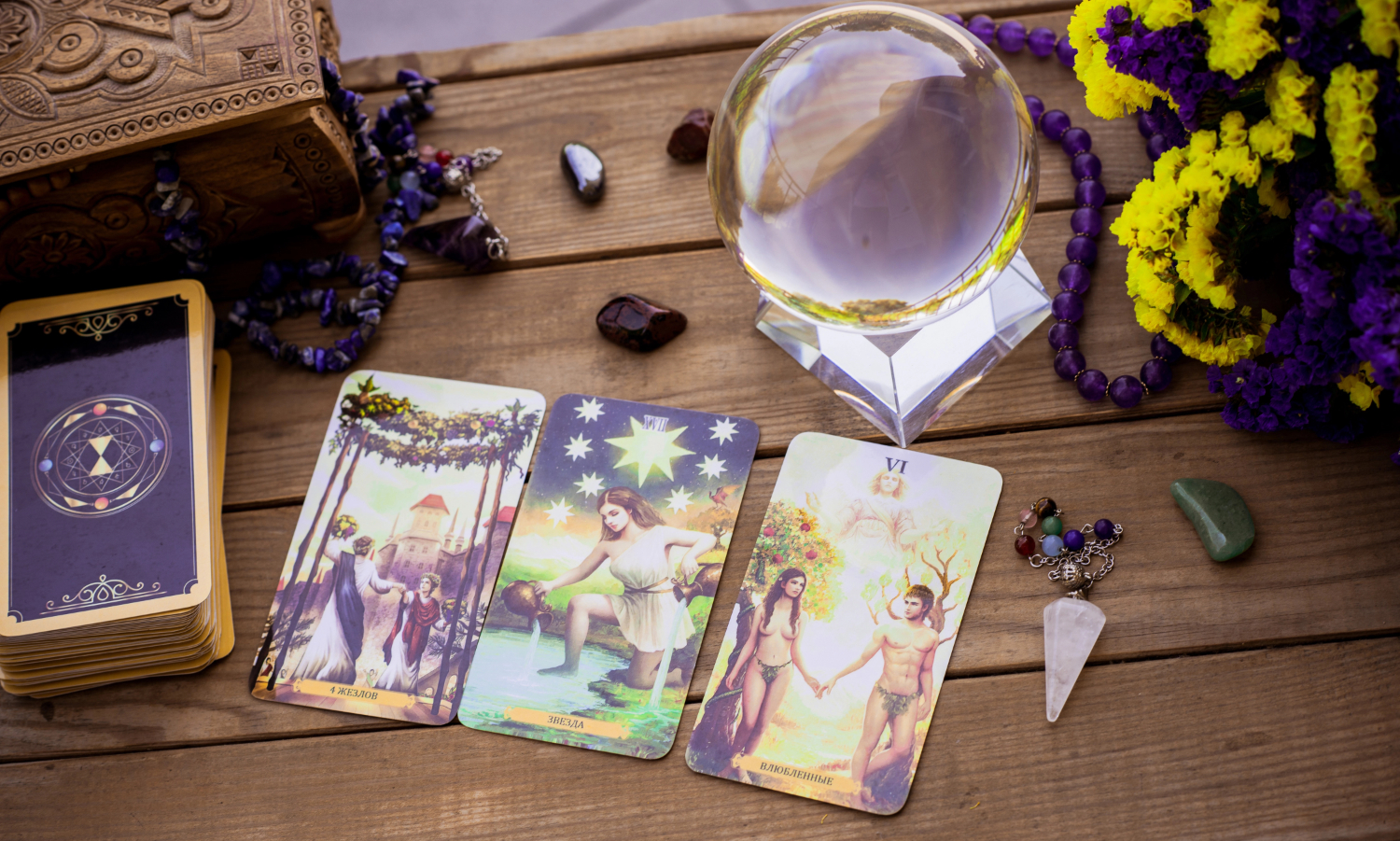
When someone’s feelings are unclear, it is natural to want an answer. You may be rereading messages, replaying your last conversation, or wondering whether the distance between you means “not yet” or “not at all.” In that tender place, a question like What are they thinking about me? can feel urgent.
A three-card love tarot spread is a simple reading that uses three positions to explore one focused relationship question. Rather than treating the cards as a window into another person’s private mind, this free spread helps you consider what you already know, what uncertainty may be stirring in you, and what next step would protect your peace and dignity.
Tarot can give you language for patterns, hopes, fears, and possibilities. It cannot verify another person’s unspoken thoughts or replace an honest conversation. The cards are most helpful when they return your attention to the part of the relationship you can influence: your choices.
This reading welcomes every gender identity and relationship configuration. Use it for a current partner, former partner, date, crush, or any meaningful connection in which uncertainty is weighing on you.
Can Tarot Really Tell You What Someone Is Thinking?
Not with certainty—and I would be wary of anyone who promises otherwise.
A card may reflect the emotional atmosphere surrounding a connection. It may help you notice mixed signals, unspoken expectations, avoidance, attraction, grief, or a need for clearer boundaries. But it is not proof of what another person thinks, feels, intends, or will do.
There is also an ethical boundary here. I do not perform in-depth readings on a third party without that person’s permission. Reading responsibly means respecting their privacy while still making room for your very real need for clarity.
So instead of asking the cards to expose a private thought, try asking:
- What am I being invited to understand about this connection?
- What do I know from this person’s words and actions?
- What might I be assuming because I feel uncertain?
- What would help me feel grounded and respected?
- What is the healthiest next step available to me?
These questions may sound less dramatic than What are they thinking? But they often lead to an answer you can use.
Your Free 3-Card Love Tarot Spread
You can do this free three-card love tarot reading with a physical deck, a digital deck, or three cards selected from any online tarot tool you trust. You do not need to be highly intuitive or know every card by heart. A guidebook and a willingness to be honest with yourself are enough.
Use these three positions:
- What I know — What has this person clearly communicated through words, choices, or consistent behavior?
- What may be clouding the picture — What hope, fear, old wound, or assumption could be shaping my interpretation?
- What supports me now — What response, boundary, conversation, or act of self-care would serve me best?
This is not a mind-reading spread. It is a clarity spread. It helps you separate evidence from interpretation without dismissing your feelings.
Before you draw the cards
Take a moment to settle. Put down your phone if you can. Make a cup of tea, place both feet on the floor, or take three slow breaths. You are not trying to become perfectly calm or spiritually impressive. You are simply creating enough space to listen.
Then write your question. A grounded version might be:
What do I need to understand about my experience of this connection, and what would support me now?
Read it once before you shuffle. If you notice yourself demanding a particular answer—Tell me they love me. Tell me they are coming back—do not shame yourself. Name the hope without letting it control the reading.
How to complete the reading
- Shuffle in whatever way feels comfortable. There is no single correct method.
- Draw three cards and place them from left to right.
- Look at each card before reaching for a guidebook. Notice your first response, but do not treat that response as a verdict.
- Read the guidebook meaning, then connect it to the card’s position.
- Consider all three cards as one conversation rather than three isolated answers.
- Write down one practical next step that depends on your choice—not on someone else changing.
If you use reversals, read a reversed card as a possible blockage, internal process, delay, excess, or need for attention—not automatically the worst version of the upright card. If you do not use reversals, turn it upright and continue.
How to Interpret Each Position
Card 1: What I know
This position asks you to begin with reality. What has actually happened? What has this person said? Have their actions matched their words? Are they available, communicative, and consistent—or are you doing most of the emotional work?
The Two of Cups may reflect mutuality, openness, or the wish for an equal emotional exchange. But it does not prove that the other person is secretly committed. Ask whether reciprocal effort is visible, or only potential.
The Hermit may mirror distance, reflection, or withdrawal. It cannot tell you the private reason for someone’s silence, but it can help you acknowledge that space and consider what you need within it.
The aim is not to make the card fit your preferred story. Let it help you look more closely at what is already in front of you.
Card 2: What may be clouding the picture
Love and uncertainty can make the imagination work overtime. This position is not an accusation that you are “making it all up.” It is an invitation to notice the emotional lens through which you are viewing the connection.
The Moon here could point to ambiguity, fear, or the absence of enough information. The Seven of Cups might suggest that multiple possibilities are competing for your attention. The Nine of Swords may show how worry is taking up more space than the facts themselves.
Even a warm card deserves care here. The Star can show hope and healing while asking whether hope has become a reason to wait indefinitely. The Six of Cups can reflect tenderness while reminding you that nostalgia is not present-day compatibility.
Ask yourself:
- Am I responding to this relationship as it is, or as I hope it will become?
- Is a past hurt making silence feel more threatening?
- Am I giving one message more weight than a larger pattern of behavior?
- What information am I genuinely missing?
Compassion is important here. Seeing a projection or fear clearly is not a failure. It is a way of returning to yourself.
Card 3: What supports me now
The third card brings the reading back to agency. It may suggest a conversation, a pause, a boundary, a change in pace, or renewed attention to your own life.
The Queen of Swords might encourage you to ask a direct question and listen closely to the answer. Strength may call for patience that is steady rather than self-abandoning. The Eight of Cups can suggest recognizing when an emotional situation is no longer nourishing you. The Empress may remind you to care for your body, creativity, friendships, and sense of worth instead of making one person the center of your inner world.
A supportive card is not always comfortable. Sometimes the kindest guidance is to stop chasing certainty from someone who is not offering clarity. Sometimes it is to speak or to wait until your emotions settle. Let the whole spread—and real-life facts—help you tell the difference.
What Common Love Cards May Be Asking You to Notice
No tarot card has one fixed relationship meaning. The question, position, surrounding cards, and your circumstances all matter. These examples are starting points, not predictions.
The Lovers
The Lovers can speak to attraction and partnership, but also to values and conscious choice. Ask whether the connection supports the values you want to live by. Chemistry matters; so do honesty, respect, and compatibility.
Two of Cups
The Two of Cups often reflects mutual exchange or emotional recognition. Look for reciprocity in real life before interpreting it as a promise of commitment.
Knight of Cups
The Knight of Cups can bring romance, charm, or emotional expression. It may also ask whether beautiful words are supported by consistent action.
The Moon
The Moon can reflect intuition, fear, uncertainty, or missing information. It is not proof of deception. Distinguish what you sense from what you can confirm.
The Devil
The Devil does not mean someone is evil or a relationship is doomed. It may point to attachment, unhealthy dynamics, temptation, or a difficult pattern. Notice where fear or desire limits your freedom.
The Tower
The Tower can describe disruption, revelation, or an unstable structure. It does not automatically predict a breakup. Ask what truth needs attention and what steadier foundation could follow.
Death
Death rarely refers to literal death. It speaks to endings and transition. In love, it may describe a changing relationship, the end of a pattern, or an old expectation ready to be released.
Ten of Cups
The Ten of Cups can reflect belonging and a shared vision of happiness, but it is not a marriage certificate. Ask whether the relationship is building toward fulfillment in practical ways.
Court cards—the Pages, Knights, Queens, and Kings—need not represent literal people. They may show a communication style, an attitude, or a quality you are being asked to develop.
Choosing the Right Love Tarot Spread
More cards do not automatically create a better or more accurate reading. The right spread is the one that gives your question enough room without burying you in possibilities.
| Spread | Best used for | Watch for |
|---|---|---|
| 3 cards | One focused question; quick reflection; a clear next step | Trying to squeeze an entire relationship history into three positions |
| 6 cards | Exploring two perspectives, needs, challenges, and support | Treating the other person’s cards as verified private thoughts |
| 7 cards | A layered relationship dynamic or a decision with several factors | Reading every card as a separate prediction |
| Celtic Cross | A broad, complex situation with internal and external influences | Information overload when emotions are already heightened |
A past-present-future spread can show how a connection developed and where its current pattern may lead. “Future” means a possibility based on present conditions, not a predetermined outcome.
A you-them-relationship layout can also work if “them” means what is observable in their role, not secret access to their mind.
For questions about marriage, reconciliation, or long-term potential, a larger spread may provide more context. Yet the same ethical limit remains: no spread can guarantee that someone will return, propose, change, or stay.
Are Free Online Love Tarot Readings Accurate?
An online tarot spread can be useful, but “accurate” may not be the most helpful measure. A computer-selected card cannot confirm hidden facts about another person. A human reader cannot ethically guarantee those facts either.
Instead, consider whether the reading is:
- Relevant: Does it speak to the question you actually asked?
- Grounded: Can you connect the interpretation to observable reality?
- Balanced: Does it allow for more than one possibility?
- Empowering: Does it return a meaningful choice to you?
- Ethical: Does it respect consent and avoid fear-based claims?
Online readings can create a useful pause, but generic interpretations may not account for your circumstances. Repeated clicks can also become a search for the answer you want.
Intuition is part of interpretation, but it is not certainty. Place intuitive impressions beside the evidence: What do I feel? What do I know? What remains unknown?
When to Read Again—and When to Put the Cards Down
There is no universal rule for timing. Wait until something meaningful changes or you have had time to act on the guidance you already received.
If you pull cards about the same person several times in one day, the reading often becomes less clear, not more. You may begin negotiating with the deck: changing the question, drawing clarifiers, or continuing until a reassuring card appears.
Pause if you notice that:
- you feel more distressed after every reading;
- you are asking the same question without new information;
- you are using tarot instead of having a safe, necessary conversation;
- a card is influencing a major decision more than facts and values are;
- you no longer feel free to disagree with the reading.
Repeated cards do not mean the universe is shouting a prediction. They may reflect a theme you continue to notice or ordinary repetition within a shuffled deck. Write the card down, explore it once, and give yourself space.
Taking Action After a Love Tarot Reading
A reading becomes useful when it helps you live with more honesty and care. Close the session by answering these four questions in a journal:
- What do I know from this person’s actual words and behavior?
- What story am I tempted to add?
- What do I need in order to feel respected and emotionally safe?
- What is one action I can take without trying to control the outcome?
That action might be a clear message, a limit on how long you will remain uncertain, a step back, or renewed attention to the rest of your life.
Patience can be wise when both people communicate and circumstances need time. Waiting becomes painful when it requires you to ignore your needs or put your life on hold.
Tarot can sit beside relationship advice, counseling, and honest conversation, but it should not replace them. If a relationship involves coercion, threats, stalking, or abuse, prioritize practical support and safety rather than a card reading.
A Note From Katherine, Your Reader
I have been reading tarot for four years. I first reached for the cards when my own life felt as though it were in shambles and I wanted to know what plan the Universe had for me. After a soul-crushing breakup, one reading helped me see that healing needed time and space. The value was not in spying on someone else’s heart; it was in recognizing the compassionate response available to me.
I learned through daily practice, guidebooks, videos, new spreads, and readings with other tarot readers. I now read warmly and honestly, without leading with fear. I will read the Tower as readily as the Sun, but neither becomes a threat or guarantee.
You do not need perfect intuition to read tarot. Curiosity, practice, and a willingness to tell yourself the truth can take you a long way.
Frequently Asked Questions
How accurate are free three-card tarot readings for love?
They can be meaningful tools for reflection, but they cannot verify another person’s private thoughts or guarantee an outcome. A useful reading connects with observable reality, supports your agency, and leaves room for circumstances to change.
Can tarot really tell me what someone is thinking about me?
Tarot may help you explore the emotional pattern you perceive, but it cannot confirm what another person is thinking. Their words, actions, and direct communication are the best evidence. A responsible reading focuses on what you need to understand and choose.
What is the best free tarot spread for relationship questions?
For one focused concern, start with three cards. The What I know / What may be clouding the picture / What supports me now spread is simple, ethical, and practical. Use a larger spread only when you need more context.
How often should I do a love tarot reading?
Wait until circumstances change or you have had time to work with the previous reading. If you are repeating the question to find a preferred answer, put the cards down and return to the facts for a while.
What does it mean if I keep drawing the same cards?
A repeated card may highlight a theme you have not finished exploring, but it is not automatic proof of a predicted event. Journal the card, consider how it relates to your choices, and avoid piling on more readings out of anxiety.
Are online tarot readings as accurate as in-person readings?
Both can prompt reflection and both have limitations. An in-person reader offers dialogue; an online reading offers a private pause. Neither promises certainty about another person or the future.
Can tarot predict whether we will get married or stay together?
Tarot can help you explore compatibility, hopes, patterns, and present direction. It cannot guarantee marriage or permanence because relationships are shaped by the ongoing choices of everyone involved.
What if I receive difficult cards in a love reading?
Pause before assuming the worst. Death, the Tower, the Devil, or Three of Swords may name change, unhealthy attachment, disruption, or pain—not punishment. Ask what truth, support, or boundary deserves attention.
Let the Reading Bring You Back to Yourself
Wanting to know what someone thinks is often another way of asking, Am I safe to hope? Do I matter? What should I do with all this uncertainty? Those questions deserve tenderness.
The cards may not hand you access to another person’s mind. What they can offer is a quiet place to hear your own needs more clearly. Begin with what you know. Be gentle with what you fear. Then choose the next step that lets you remain honest, grounded, and fully yourself.
If you would like compassionate support interpreting a love reading without fear-based predictions, you are welcome to explore Katherine’s readings on Etsy. There is no pressure—your own pace and judgment remain at the center.
Tarot is a reflective and spiritual guidance tool. It is not a substitute for medical, legal, financial, mental-health, or other professional advice, and no reading can guarantee a specific relationship outcome.