What Is a Tarot Reading? A Beginner’s Complete Guide
A warm, grounded beginner's guide to what tarot reading is, how a tarot deck works, how to try a simple reading, and what to expect from your first session.
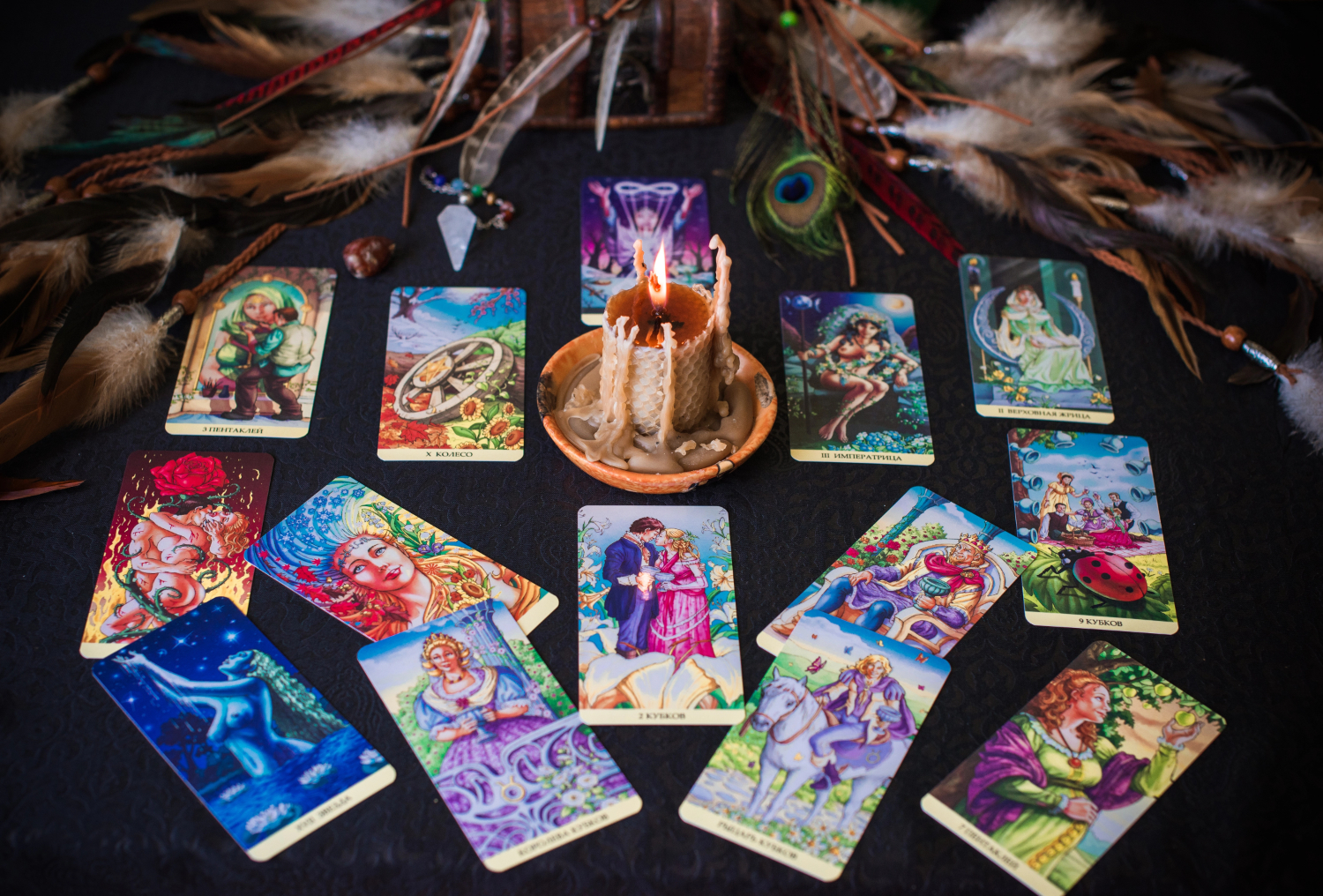
Maybe you have seen a tarot deck spread across a candlelit table and wondered what, exactly, is supposed to happen next. Does the reader predict the future? Do you need to believe in anything particular? And what if you turn over a card that looks frightening?
Take a breath and settle in. A tarot reading is a practice of using a deck of symbolic cards to explore a question, notice patterns, and consider possibilities. Some people approach tarot spiritually, some use it as a reflective prompt, and many sit somewhere in between. A thoughtful reading does not require you to hand over your judgment or treat the cards as a fixed verdict.
This beginner’s guide explains what a tarot reading is, what is inside a tarot deck, how to try a simple reading for yourself, and what you can expect if you book a session with a reader.
What exactly is a tarot reading?
In a tarot reading, cards are shuffled, drawn, and placed in a pattern called a spread. Each position in the spread gives the card a role. One card might represent what is asking for your attention; another might point toward a helpful next step. The reader considers the card’s traditional meanings, artwork, position, relationship to the other cards, and the question being explored.
The result is an interpretation, not a laboratory test or an unchangeable prediction. A reading may help you name a feeling, see a familiar situation from another angle, or recognize where you still have choices. You are allowed to disagree with an interpretation, set it aside, or decide that it does not fit.
Tarot also has a longer history than its modern mystical image suggests. The earliest references date to fifteenth-century northern Italy, where tarot was used for a trick-taking card game. According to The Metropolitan Museum of Art’s history of tarot, the association with fortune-telling and the occult became widespread much later, in the nineteenth century. That history leaves room for the range of approaches you see today: devotional, intuitive, secular, creative, and reflective.
You do not have to choose the “correct” philosophy before you begin. It is enough to be honest about your own approach. If spiritual language is meaningful to you, you can include it. If you prefer to work with the images as prompts for reflection, that is welcome too.
The anatomy of a tarot deck
A standard modern tarot deck has 78 cards divided into two groups: 22 Major Arcana cards and 56 Minor Arcana cards. Historic packs varied, and tarot traditions still differ, but this structure will appear in many beginner decks.
| Part of the deck | Cards | What readers often explore |
|---|---|---|
| Major Arcana | 22 named or numbered cards, including The Fool, The Lovers, Death, The Tower, The Star, and The World | Larger themes, turning points, values, identity, and lessons that may shape a chapter of life |
| Minor Arcana | 56 cards in four suits; each suit has cards Ace through Ten plus Page, Knight, Queen, and King | Everyday experiences, choices, relationships, thoughts, feelings, work, and practical circumstances |
In the popular Rider-Waite-Smith tradition, the four suits are Wands, Cups, Swords, and Pentacles. Readers commonly connect Wands with energy or creativity, Cups with emotions and relationships, Swords with thought and communication, and Pentacles with resources, the body, home, or work. These associations are useful starting points, not rigid rules.
The four court cards can describe a person, a role, a style of responding, or an aspect of yourself. A Queen does not have to represent a woman, and a King does not have to represent a man. Read the qualities of the card rather than assigning gender or identity to someone.
Historically, Italian tarot suits were Cups, Swords, Batons, and Coins, with 21 trumps and a Fool added to 56 suit cards. The Met’s exhibition notes describe this 78-card structure in the fifteenth-century Visconti-Sforza Tarot. Modern deck creators may rename suits, reorder a few cards, or reinterpret the art, so read the guidebook that comes with your deck.
Which deck is best for a beginner?
Choose one with artwork you can see clearly and want to spend time with. A Rider-Waite-Smith-based deck is often easy to learn because many books and card guides discuss its imagery. But you do not need to force a connection with a deck simply because it is popular. Look for readable titles, an inclusive visual world, and a guidebook that explains the creator’s choices.
How to start a tarot reading: preparation without pressure
You do not need a special cloth, a perfectly quiet room, or a collection of crystals. Preparation is simply a way to give your attention somewhere to land.
- Choose a place where you can pause. Clear enough space for the cards and, if you like, bring a notebook and a warm drink. A few uninterrupted minutes matter more than elaborate atmosphere.
- Notice your state of mind. If you are panicked, exhausted, or trying to make the cards relieve an urgent fear, pause first. Take a few slow breaths, step away, or return another day.
- Set an intention. This can be as simple as, “I want to understand what needs my attention.” You are not demanding certainty; you are making room for an honest look.
- Form an open question. Questions beginning with what, where, or how usually leave more room for insight than “Will this happen?” Ask about your experience and choices rather than another person’s private thoughts.
- Choose a small spread. One card is enough. If you want more structure, use three cards. More cards do not automatically create a clearer reading.
- Decide how you will use reversals. A reversed card is one that appears upside down. You may read it as blocked, internal, delayed, or simply nuanced. Beginners can also turn every card upright while learning. Both approaches are valid.
- Shuffle in a way that feels comfortable. Mix the cards, overhand shuffle them, spread them across the table, or gently cut the deck. Stop when you feel ready. There is no required number of shuffles.
Some readers cleanse or “charge” a deck with smoke, sound, moonlight, prayer, or a knock on the cards. These are optional spiritual or personal rituals, not requirements for a deck to work. Be mindful of smoke, fire safety, pets, allergies, and any cultural practice you are borrowing. Simply putting the cards back in order, wiping the box, or taking a quiet breath can mark a fresh beginning.
Step by step: how to do a tarot reading for yourself
For your first reading, try this question: What quality would support me today?
- Write the question at the top of a page.
- Shuffle while holding the question lightly in mind.
- Draw one card and place it face up.
- Before opening the guidebook, describe what you see. Notice the figures, colors, weather, movement, and where your eye goes first.
- Name your first response. Does the card feel spacious, tense, tender, active, guarded, or uncertain? This is an observation, not a final meaning.
- Read the guidebook entry and note one traditional meaning that seems relevant.
- Bring the image, traditional meaning, and your real situation together. Finish the sentence: “Today, this card may be inviting me to…”
- Choose one small action, or decide that simple awareness is enough.
Imagine drawing the Four of Swords. You notice a still figure and a quiet scene. Your guidebook emphasizes rest, recovery, and mental pause. In the context of the question, you might write: “Today, this card may be inviting me to leave ten minutes unscheduled instead of filling every gap.” The card has not diagnosed you or ordered you to cancel your responsibilities. It has offered a perspective you can accept, adapt, or leave.
A simple three-card reading
When one card feels too open-ended, use three positions:
- What is present?
- What deserves care or attention?
- What is one possible next step?
Lay the cards from left to right. Read each card in its position, then look across all three. Are colors, numbers, suits, or postures repeated? Does the scene seem to move from confusion toward clarity, or from action toward rest? You are looking for a story, not trying to prove a prediction.
Many guides teach past-present-future as a first three-card spread. You can use it, but treat “future” as a possible direction shaped by current conditions, not a guaranteed destination. If you want to keep agency more visible, try situation, support, next step instead.
Common tarot spreads for beginners
- One-card check-in: What would be useful to notice today?
- Situation, choice, support: What is happening, where do I have a choice, and what may support me?
- Mind, heart, body: What am I thinking, feeling, and experiencing physically? Keep body observations general; tarot cannot diagnose a health condition.
- Release, keep, welcome: What can I loosen my grip on, what remains valuable, and what might I make room for?
- Decision reflection: What matters most, what might I be overlooking, and what information do I still need?
The Celtic Cross is a well-known ten-card spread, but it can be a lot to hold when you are learning. Save it until you feel comfortable linking several cards. The best spread is not the most impressive one; it is the one that helps you stay present with a clear question.
How to interpret tarot cards without memorizing everything
Traditional meanings give you a shared vocabulary. Intuition helps you notice which part of that vocabulary matters here. You do not have to choose one and reject the other.
Start with three layers:
- The card: What is its familiar meaning? What do the image, suit, element, or number suggest?
- The position: Is the card describing the situation, a challenge, a resource, or a possible action?
- The context: How does this meaning relate to the question without making claims the card cannot support?
A tarot journal can make learning gentler. Record the date, question, cards, first impressions, and one sentence about what felt useful. When you look back, focus on how your understanding developed rather than whether the card “came true.” Some people learn through keywords; others remember stories, colors, or patterns. Use the method that helps you stay curious.
What about “lucky” or frightening cards?
No card guarantees good luck. The Sun, The Star, and the Ace of Cups are often welcomed because they can suggest clarity, hope, warmth, or emotional renewal. Their meaning still depends on the question and position. A bright card can ask whether you are willing to be seen; a hopeful card can invite patience rather than promise an outcome.
Likewise, Death rarely needs to be read as literal death. It often points toward endings, transition, or making space for change. The Tower can reflect disruption, revelation, or a structure that no longer holds. Difficult-looking cards deserve compassion and context, not panic. If a card scares you, name the feeling, consult the guidebook, and ask, “What is this image inviting me to notice?” You can end the reading at any time.
How often should you do a tarot reading?
There is no universal schedule. A brief daily draw can support study. A weekly reading can offer more room to observe patterns. Reading only when a meaningful question arises is equally valid.
Pay attention to the effect the practice has on you. It may be time to pause if you keep asking the same question, draw repeatedly until you get the card you want, feel less able to decide without the deck, or finish readings more frightened than grounded. Let the reading breathe. Take an action, gather real-world information, speak with someone you trust, or allow circumstances to develop before asking again.
There are also moments when tarot should not carry the question. It cannot replace a doctor, therapist, attorney, financial adviser, emergency service, or other qualified support. If a choice involves safety, health, legal rights, or money, use appropriate professional information. Tarot may help you reflect on your feelings or values alongside that support, but it should not be the deciding authority.
What to expect in your first reading with a tarot reader
A professional reading may happen in person, over video or phone, or through a written message. The reader will usually explain the format, invite your question, choose or recommend a spread, and talk through the cards. You can ask what a symbol means, request clarification, decline to discuss something, or stop the reading.
A trustworthy reader should be clear about boundaries. They should not guarantee a reunion, pregnancy, legal outcome, financial gain, or exact timeline. They should not claim certainty about another person’s hidden thoughts. They should not frighten you with curses or pressure you to buy repeated readings to prevent harm.
You might leave with a strong insight, several questions, or simply a new way to describe what you already sensed. You might also feel unsure at first. A reading does not have to feel dramatic to be useful. Give yourself time to decide what fits, and keep your choices in your own hands.
Frequently asked questions
Do I need to be psychic to read tarot cards?
No. You can learn tarot through study, observation, practice, and reflection. People understand intuition in different ways, but no special identity or supernatural claim is required to begin.
Can I read tarot for myself?
Yes. Self-reading can help you learn the cards and explore your own perspective. It can also be hard to see beyond a hoped-for answer, so write your question down, use a small spread, and notice when you need distance or an outside viewpoint.
How long does it take to learn tarot?
There is no honest deadline. You can begin a meaningful one-card practice immediately, while fluency grows through repeated use. Aim for familiarity rather than perfect memorization. Even experienced readers continue to discover new details in familiar cards.
What should I ask during a tarot reading?
Ask questions that center your experience and leave room for choice: “What may help me understand this situation?” “What deserves my attention?” or “How can I approach this conversation with care?” Avoid asking the cards to invade someone else’s privacy or guarantee an outcome.
Are reversed cards negative?
Not automatically. A reversal may suggest that a quality is internal, blocked, delayed, excessive, or asking for a different expression. It can also add nuance rather than reverse the upright meaning. You may choose not to use reversals at all.
Can tarot predict the future?
Some traditions use tarot for divination, but a responsible reading does not treat the future as fixed or promise certainty. It is more grounded to read future-facing cards as possibilities, patterns, or directions that can change with choices and circumstances.
Meet Katherine, your reader
Katherine is the reader behind Tarot Over Tea and Tarot & Tea Diaries. She has been reading tarot for four years, beginning during a season when life felt as though it had come apart and she found herself wondering what plan the Universe might have for her.
One of her first meaningful readings came after a soul-crushing breakup. The cards helped her recognize that her own healing was still unfolding and invited her to consider how giving the other person time and space could be an act of care—the same patience she would have wanted in return. That experience shaped an important part of her approach: tarot can offer perspective on how you respond to a situation without claiming certainty about someone else’s private thoughts or feelings.
Katherine learned through daily practice, tarot guidebooks, online demonstrations, new spreads discovered through Pinterest, and the experience of having her own cards read by other readers. She believes intuition can deepen with attention and practice, but you do not need to arrive with highly developed intuitive abilities to begin learning the cards.
Her reading style is warm, open, honest, and compassionate. She reads the card that appears—upright or reversed, Tower or Sun—without using fear to make the message feel more dramatic. When a reading brings forward a difficult truth, her responsibility is to explain it with a warm heart, grounded language, and a listening ear.
Consent matters in Katherine’s practice. She does not conduct in-depth readings about third parties without their permission. She may ask for a partner’s name or birth date so she can refer to them respectfully or, when relevant and requested, compare astrological charts; that information is not treated as permission to claim access to the person’s inner life.
Katherine started this blog to make tarot feel more accessible and to help readers feel nurtured, seen, and heard. And the tea? It is her comfort drink and part of the welcome. She reads tarot cards, not tea leaves.
A gentle first practice
Set aside five quiet minutes. Ask, What would help me meet today with a little more steadiness? Draw one card. Write down three things you see, one traditional meaning, and one small choice the card brings to mind. Then close the deck. You do not need to solve your whole life at the table.
Tarot can be mysterious without being frightening, meaningful without being absolute, and spiritual without asking you to abandon discernment. Let it be a conversation: one that gives you a little room to breathe, reflect, and hear your own wisdom more clearly.
Tarot offers space for spiritual reflection and entertainment without guaranteed predictions or outcomes. It does not replace medical, mental-health, legal, or financial advice. Your choices are always your own.
If you would like a reflection shaped around your own question, you are warmly invited to explore the current personalized readings in the Tarot Over Tea Etsy shop. There is no rush; the cards will still be here when you are ready.
Sources
- Tim Husband, “Before Fortune-Telling: The History and Structure of Tarot Cards,” The Metropolitan Museum of Art.
- “The World in Play: Exhibition Galleries,” The Metropolitan Museum of Art.